Showing posts with label AIDS. Show all posts

Monday, September 16, 2013

USNY: Shakespeare Update "The Hollow Crown"

In this blog, I'm going to plug a PBS show and a new book about AIDS research. I hadn't actually planned it that way. Just wanted to warn you in advance.


The University of Steve in New York is what I call my current self-generated (bonus round) plan to learn everything in the world there is to know and write one of everything that can be written. Part of that education are the Shakespeare Studies, an inadvertent course (correction)

It happened after I was invited to participate in Andy Gale's advanced scene study acting class after having worked with him and the students at Manhattan School of Music. BTW, Andy doesn't have a website and he doesn't go on Facebook. Currently, however, he's performing in a production of "Fiddler" out in Portland, since, aside from being one of the best acting coaches in the City, he's also a working actor and singer. He mostly works privately with a great number of stars whose names you would know. The class I entered is filled with amazing actors. Young and old. Mostly unknown, but really talented.

Since I had never been to an acting class in my life, I felt a bit unprepared. I thought, it's absurd to be taking an acting class and not know anything about Shakespeare. That's like a music scholar never having heard any Beethoven.

So, acting as my own curriculum counselor, I assigned myself the task of reading all the way through Shakespeare and memorizing at least one speech from each play that grabbed me for whatever reason.
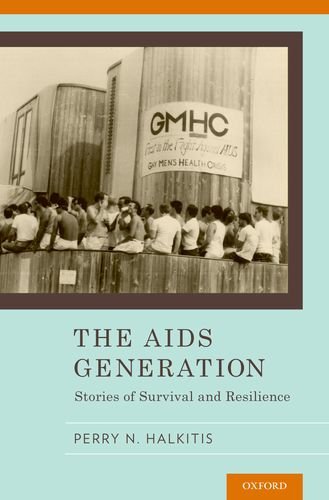
For more info, I recommend
this book by Perry Halkitis.
(I'm doing this, also, as a cognitive exercise because, as I spoke about previously, longterm AIDS survivors (The AIDS Generation) are facing not just an unknown future, but an unknown present. How do you know when or if your brain starts going wacko? And what do you do after you know it's started? It has driven more than a few people mad.)

And Jim is always looking at me as if I've lost my mind. But then, he always did.

I say all this because every action I take in life right now has to be weighed as to whether it's healthful for me or not. To not be actively engaged is not healthful.

I read Twelfth Night and enjoyed it because it was much sillier than I was expecting. You go into Shakespeare thinking it's this impenetrable wall of  intellect. You know. Boring. Serious.

Then, I read Merchant of Venice and Hamlet, like taking a tour through all the greatest hits. There was a familiarity in them in that I have sat through movies and some productions of Shakespeare and stuff, but if you had asked me what either of those plays were about, or what happens in them, I wouldn't have been able to tell you.

They didn't stick. It felt more like the first part of an investigation where I was gathering facts.

If I was going to find my way in, I had to find my own door.

I read them using "No Fear Shakespeare,"  (another plug) where Shakespeare's language is set alongside a modern language translation. And I suppose it was like learning a new language, in a way. Not just many of the words, but the arrangement of the nouns and verbs, which is more like Spanish, which I know from having spent a summer in Monterrey, Mexico as a Baptist missionary among the heathen Catholics.

It was Richard II that got to me.

I knew zero about this play. Nothing.

I had learned a speech from Merchant -- which I can't even remember right now -- and it got me very excited. I had learned my first monologue, realizing I could do it. Several times in class, I pulled it off. But, since this is all really new to me, mostly I was over-acting. I could tell. But I did it! And it felt great!

I thought, screw this reading through them all. I'll just google Shakespeare monologues and find one I like.

I came upon the "hollow crown" speech from Richard II. And I fell in love. It's about having nothing left. Being totally at the bottom and remembering that, for all our pretensions, we're all just human beings.

The speech possessed me for weeks. I would recite it while riding the bus to Brooklyn on Sunday morning. I would walk around the City, reciting it. Wouldn't that be cool if a whole City walked around quoting Shakespeare?

I didn't even read the play! I just needed that speech, about how death sits in that crown, keeping court and laughing at pomp and ceremony.

And I thought, Yes! In the bonus round, you sit and laugh at how frail and stupid and unkind and sick and silly and smart and all full of ourselves and lost we all are. Whether we're the ruler of some nation or a lonely guy sick in bed, the rock star of the moment or living in a war zone, the movie star or the teacher or the student or a child.

There the antic sits.
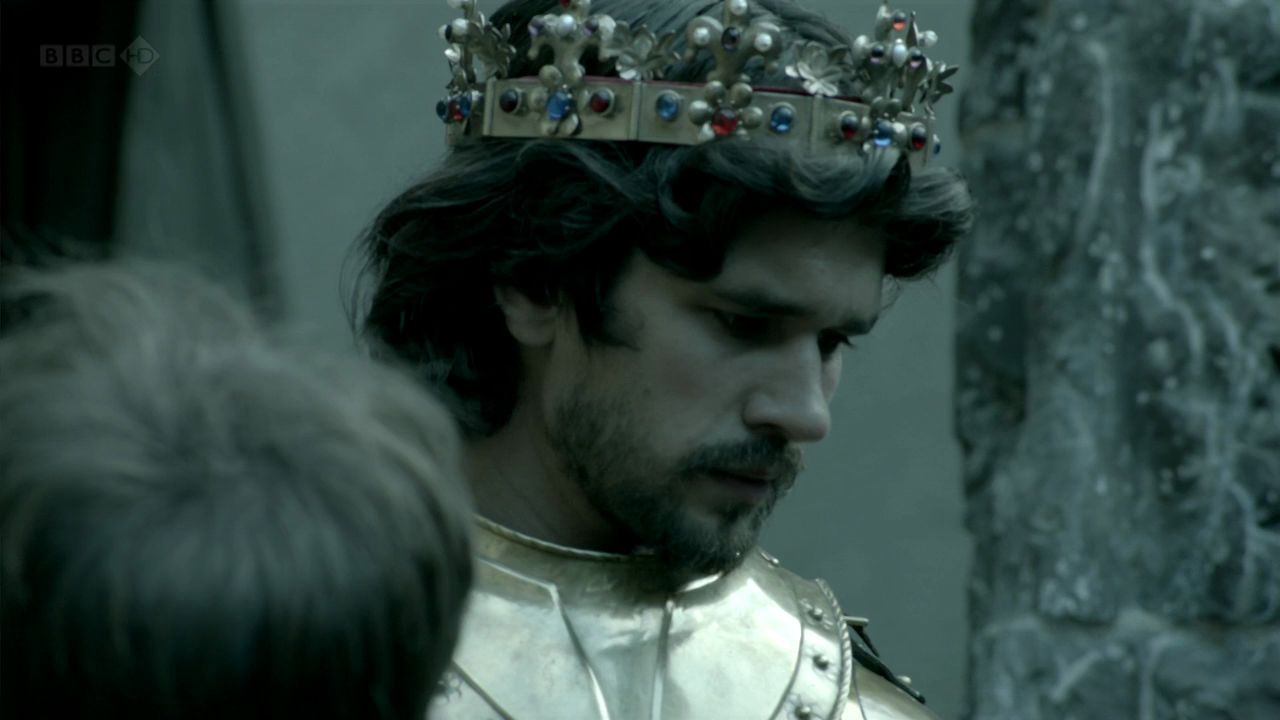
Ben Whishaw as Richard II in "The Hollow Crown"
And there Richard sits. If he's King, he's still in prison. If he's a pauper, he's still in prison. And yet he is God's chosen! But whether Divinely-annointed or not, his fate is the same: death.

I remember when I had accepted my own death, it was like the weight of the world lifted off my shoulders. There he sits. Hello, death! Nice meet you. How warm your embrace almost was. How not scary you were when I met you face to face.

When I read about this BBC/PBS co-production, and that it's called "The Hollow Crown," where they've filmed all the history plays beginning with Richard II, and that Ben Whishaw is playing Richard, I about felt like I did just before the Super Bowl back when I lived in Roger Staubach / Tom Landry Dallas.

It is a miracle to me, having grown up pre-Internet, that I could so easily find all this great wealth of our civilization, and usually for free. What a time we live in.

______
If you wish to join me and attend the University of Yourself, by the way, there is no tuition. And everything you need to learn is on the Internet.

Saturday, September 14, 2013

The Word I Couldn't Remember.

"I've got a patient in his 40s and his cognitive function is..."

This was my doctor talking to me yesterday.

I don't remember the word he used. Degraded. Screwed up.

I was sitting in my running shorts. I had run to the appointment, continuing my training (for SteveFest60). The clinic is down on west 17th street.

"You've gone from using 60 units of insulin a day to zero after only a month of daily aerobic exercise."

"Yes, and 40 at night on the Lantus, down from 60." (That's the basal insulin).

After the exam, he was writing out the prescription for the blood tests for three months from now. He numbered them off but had missed one. I said, "And the thyroid." (I have Grave's Disease. My right eye is a little googly and tends to wander off.)

He snapped a happy grin at me. "And your mind. Your mind is quick. I talk about you when I do presentations."

"You talk about me??" I beamed.

"We don't know the long term affects of this virus. What's the difference between him and you? That's what we have to find out."

I ran-walked and jogged home. Took my blood. 75. Just in time to eat.

The man in his 40s whose cognitive function is impaired. That's the word. That's the word I couldn't remember. Impaired. That guy didn't impair himself. And the same virus that's attacking him is attacking me. I don't know what's going to happen, or is happening, to me.

I don't know what kind of life he leads. But, as I say in my concerts, the music gave me life. My friends give me life. Learning. And physical training gives me life.

God bless all my fellow positoids. And to all who love us.


Thursday, August 29, 2013

Health Update: The Exercise (surprise) Is Causing Miracles.

I've been exercising, each day, more and more. Yesterday, I did a very long run (for me), almost two miles. Then, later, went back and did another two miles. For real runners, this isn't much. But for me, it's a lot.

The strange thing is that I didn't need insulin for either lunch or dinner. My metabolism was at such a high level, it disposed of the sugars all by itself, I guess. And it didn't hurt that I am eating low carb meals, while supplementing with extra whey protein.

My blood tests reflected all this good news, too. The virus is still undetectable in my blood. My t-cell count is up over 500 (which is way below normal, but great for me).

Also, my A1c dipped below 6.0 to 5.9, which was great cause for celebration at Dr. Tony's.

So, the training continues under Cat Steinbeck's watchful eye.


Tuesday, June 11, 2013

Incorporating "disease" into your life.

I don't actually spend that much blogtime
Or real life time talking about my ailments
So all this attention to my virus lately
And the side effects
Feels a bit weird

But it wasn't a publicity stunt
I didn't seek them
They found me
And I'm glad they did

I'm glad you did

Anyway, just for the record:
A blog post about ailments

People read the article and ask
"How do you do it?"
Meaning the pills, the shots,
The diet, the pain, the side effects
And the pills for the side effects

The answer is you incorporate it
You live as if you were born this way
And that everyone is this way
You just incorporate it
And move on

I'm always thinking, through the day,
Two or three steps ahead
Will there be water?
Are we going to eat?
What do I need to bring?

But since music is the biggest part
Of my therapy
My mind is mostly on fixing that rhyme
Cutting that verse
Plus subtle key changes
I've been doing sneaky key changes lately

And when my mind is on my key changes
I forget to bring my insulin shot
And you see how it goes
There I am with a plate full of food
And I can't eat it

But I'm learning to make those moments rare

But that's it
It all started back when I made that initial decision
To live

Of course

But that's all I do
I just incorporate it, without embarrassment,
And keep moving


Friday, June 07, 2013

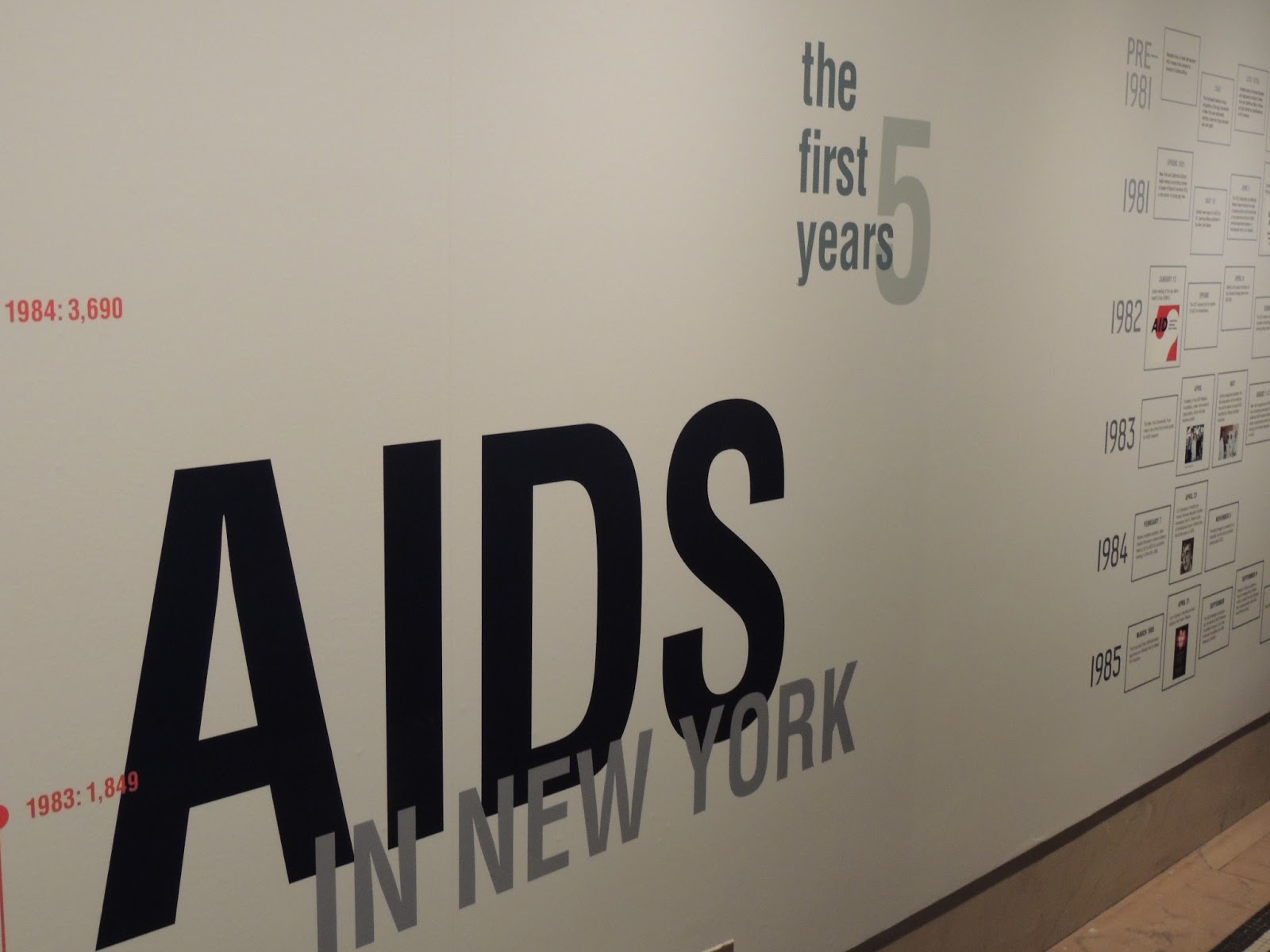
AIDS In New York: The First Five Years.

New York's first candlelight march.
The stunning New-York Historical Society Museum's AIDS new exhibit opening today called "AIDS In New York: The First Five Years" caught me completely off guard. I wasn't prepared for the flood of emotions that poured into me as I visited a history I both am, and am not, a part of. During those years, I didn't live in New York. In fact, I was mostly in a car, a van or on a plane playing backwater clubs in a cover/show band, renting studio time here and there for midnight recording session, learning my chops as a musician and getting laid and partying, as musicians do.

This world was mostly a straight world, so I get the news of AIDS second hand. A rumor of a "gay cancer." A rumor that it might be a virus. A rumor that no one knew how it was transmitted. A rumor that it was a punishment purposefully sent by God. 

I have this memory of actually being in New York for a few days during that time, and picking up some paper suggesting that this new disease was nothing more than a plot by Heterosexual America to exterminate us, either through disease or fear. Or just a plot to keep us from getting laid!

In the pre-Internet/cell phone days, one lived alone with one's thoughts. I'm not saying it was better or worse than what we have today, but the point is that I was sheltered off from most of the news as we drove from town to town. (I wrote before how I was in the airport Sheraton in Columbus, Ohio -- when John Lennon was murdered). 

So, this past week, as I found myself unexpectedly at the center of a lot of attention because of that amazing front page (Metro section) New York Times story, as well as the BBC story, one of the persons I came in contact with was Timothy Wroten, the Associate Manager, Communications for a place I'd never heard of: The New-York Historical Society.

The first thing I noticed was, of course, the "dash" between "New" and "York" in the title. New-York?

Either this was the most pretentious "society" trying to look "olde," or it was an institution that had been around for a very long time. How happy I was to find out that the latter is the case. 

When did we lose the dash? I guess I'll have to go back to find out. 


Anna Bressanin and Matthew Danizigo, the producers of the BBC segment from their "Altered States" series tied together my story with this exhibit, which I didn't know what happening, the purpose of which is to recall the "dark ages" of AIDS, back before anyone even knew if it was virus.

And in tying us together, focused on how fear and ignorance lead to death. 

Founded in 1804. We were barely a country back then.

Out front, giving Abe a bit of advice.

My L.A. friend, AIDS educator Michael Sugar, was in town.


Lately, I've been reading a lot of history about New York City, including the superb "Island at the Center of the World," which traces a lot of forgotten or unknown history pre-British. It was the Dutch that set the tone for New York (or New-York) to be the multi-cultural "center of the world" that it is.

Beautiful entrance-way.
The lobby area is both expansive and informative with early pictures of New York personalities and art
plus touch screens that describe each object found on the wall. It's really cool to play with.


Then, we went upstairs. The first thing we came to was this.


Claire Yaffa's iconic photographs take your breath away. The black room where these are set, with the photos all around reminded me a bit of the Holocaust Museum in DC where you enter a black room and the walls and ceiling are covered with every snapshots of all the people who lived in that town. But here, the collection is set off one jolting photo at a time.

This one killed me. This room alone with worth the effort.
Yes, your heart will break. But this time cannot be forgotten. 
 Then, we come to the main exhibit.


A perfect touch: vintage televisions with news casts from that time.

The first time it got described.
I had Pneumocystis carinii pneumonica. It almost killed me.
It formed the basis of the Last Session song, "Save Me A Seat."


Timothy Wroten takes us into the darkest days of AIDS.


On the ropes, with seemingly no one caring remotely about gay people -- the subject was never mentioned except in the most extreme "fags go to hell" language -- or other people with AIDS ("they did it to themselves"), the public's perception needed to be changed, the medical industry needed to be pushed, the politics needed to be changed. Funny thing happens when you're fighting for your life: Everything non-essential fades away.


But at the center of it all, as David France demonstrates in his extraordinary documentary "How To Survive A Plague," is education. The people met to get information. Where did it come from? Why is it attacking us? How is it transmitted? What does it do to you once you get it?

With few people looking, and a president looking the other way, you have to do it yourself.


Finally, funding began.


That vaccine does not exist yet.

I relate to this picture today, all the way down to the Metamucil.
The difference was that his meds didn't work.
But it was still a "somebody we don't know" disease until...

Rock Hudson died.
That's, really, when I was aware of Hollywood kicking in their support for us.
If you don't live in New-York, I hope these photos will give you a hint. I am hearing from young people today in 2013 that they aren't quite sure how you get infected, and even if you do, that's it's no big deal.


The unspoken subtext to all this is that health educators and activists are telling me that the big gay national organizations have abandoned us. When asked what their budget is for AIDS education, the answer is somewhat close to ZERO because -- and I quote, "It's not a gay issue."

Their focus on gay marriage, while tremendously successful and worthy of respect, will end in disaster if, in turning away from HIV, they lose another generation.

The tragedy of the AIDS holocaust is can happen again. All it takes is for the virus to mutate (something it does very well) a wee bit more that way rather than this way, and it can all start over again.

You can't get married if you're dead.

The New-York Historical Society's AIDS in NY: The First Five Years runs beginning today through September 15, 2013. And don't miss Larry Kramer on Wednesday, June 26 at 6:30pm discussing his play The Normal Heart, which documents this early history in blistering detail.

Thursday, June 06, 2013

TALES FROM THE BONUS ROUND: The Sad Story of Cabaret Boy

TALES FROM THE BONUS ROUND: The Sad Story of Cabaret Boy
(The Story of the Birth of The Last Session & The Rebirth of Steve)
LOS ANGELES
JUNE 1996*

*(Edit: I accidentally wrote 2013 earlier. Fixed now to 1996)

13 pounds up
(Almost a stone)
He stood naked and dry
Looking down at the number

Sure, the 10 pound mark
Was when he made the big announcement
That he would live
But these next three pounds
They came so fast
Evidence was piling up

Dare he actually believe it?
Is Songwriter Guy actually going to live?
He'd been telling everyone he would
But he ALWAYS told everyone he would
Never, in his diary did he ever say
"Well, I'm dying now"
He never even thought that way

He had learned to be a patient

Learned to use every strong moment
To accomplish something
Learned to use every weak moment
By giving himself permission
To sleep
Perchance, even, to dream

Dream that the songs that saved his life
Might actually make it to Broadway!
A place he didn't know much about
Songwriter Boy was more rock and roll
Than theater, but
Jim had been teaching him

And back at the Songwriter Academy
A few years earlier
When he was in charge of programs
He had organized a seminar on writing musicals
With the Lehman Engel Workshop

And now he had The Last Session
But were they cheering for the musical?
Or were they cheering for the
AIDS Guy singing the
Last Songs Of His Life?

He thought back to an incident
Back at the Academy
Just a couple years earlier
When a TV producer named Sandy Sprung
Married With Children!
Hired him to musical direct
A "one and only" dream
That her friend
Cabaret Boy had:
Cabaret Boy was dying of AIDS

To, just one time,
Once before he dies
Sing and perform his own cabaret act
At the Manhattan club in Silver Lake

Cabaret Boy had never sung anywhere before
Except in his own living room
But he had every Liza album
Every Judy record

So, Sandy and Songwriter Guy
Helped Cabaret Boy
Choose the songs
Eating Pollo Loco in his living room

The day of the big show
Cabaret Boy got deathly ill
"Would you go on for me?"
Cabaret Boy begged

How could he say no?

The night of the big show
Our hero sang the songs
And
In the back of the room
Covered in a blanket
Looking like a monk
Shaking like a leaf
Sat Cabaret Boy watching

Watching someone else sing his show

And now, Songwriter Guy turned AIDS Boy turned
Lazarus Child had his own dream

The Songs The Saved His Life
The musical called The Last Session
On Broadway

The difference, though, is WANTS someone else singing his show
He wants the whole world
Singing His Show

But he had one little hurdle to overcome

How the hell do you get a show to Broadway?

And how the hell do you do it while being
Hooked up to a feeding bag?


Wednesday, June 05, 2013

TALES FROM THE BONUS ROUND: THE SCALES Pt. 2

TALES FROM THE BONUS ROUND: THE SCALES Pt. 2
Recounting the birth of The Last Session and the Rebirth of Steve
Los Angeles
June 1996


Four days to showtime
The Saturday morning reading
One shot

His ears were still plugged up
He needed sound equipment
He needed a keyboard
They had one shot

David Robyn, his rocker friend,
Pledged mics, amp and speakers
His friend, Alan O'Day,
Drove over the hill with things
Alan O'Day -- Undercover Angel
Angie Baby, Rock and Roll Heaven

Alan O'Day
Who died of cancer last week
While AIDS-boy lives on

Steve Wilde and Marjorie Graue
(Buddy and Vicki)
Rehearsed songs
Between feedings from Louie
He peed a lot

Yve Evans
(Trysha)
Will drive in from the desert

Suddenly, Saturday morning
The theater is packed
The audience waiting
No keyboard
They've got one shot

Who knows if he'll live long enough
To get a second?

Yve says she'll go buy one
And return it the next day
The show must go on
She's on the way out the door
With a credit card

What he didn't know was that
Today was Gay Pride Parade day
The keyboard was late
Because Terence couldn't get thru the parade

The irony was not lost
On the gay dying songwriter
He was losing his shot
10 AM
No music stores are even open

His stomach was hurting
The bandage on his arm throbbed
From the port leading to his heart
Defeated by his own people

Then, as if from out of the blue
The keyboard arrives
Everyone scrambles
It works
The show starts
One shot

In his diary, the Songwriter notes
That he had almost no memory
Of this crucial performance
Apart from being scared
And then releasing himself
Into the emotions of the material
Because he couldn't hear it
His ears were more plugged than ever

But he remembered the hugs
The tears
The pledges of support

The next day he was too weak
To function
He stayed in bed
He let Louie feed him
He peed a lot

And then, the next day,
JUNE 10, 1996

He announces on his blog
That he has gained 10 pounds
After three years of diarrhea
Three years of not processing food
And narcotics to stop the flow

Three years of life slipping away
He had gained 10 pounds
(3/4 of a stone)

He was afraid to announce
That he just might possibly live
But he couldn't be sure
Not yet
He still felt terrible
But now he had graduated
To Thai curry chicken

No more BRAT diet

Next, they met with Gary and Linda
"What do you want to do with this show?"
He answered naively,
"I want to go to New York and
Be on Broadway!"
Gary and Linda looked at him
Looked at the skeleton
Sitting in front of them 
And thought,
"Is he even gonna make it
To the end of the week?"

No one knew.

Just How Old Am I?

From a recent article by David France ("How To Survive A Plague"):
A study presented at a conference in February in Montreal showed that otherwise healthy people on HIV medications at about 56 years of age had immune systems comparable to HIV-negative subjects whose median age is 88. Perhaps as a result, many diseases that typically attack the very old are striking younger HIV-positive people disproportionately, like diseases of the liver, kidney, heart, and veins. One study found that 55-year-olds who are HIV-positive have all the telltale signs of late-life frailty—muscle loss, fatigue, and rheumatologic disorders.
I can relate to that. I'm a cranky old man before my time!
And studies show patients with minor deficits have trouble remembering to take their medications, which can lead to more serious problems like drug resistance and even early death. “We’re not talking about people who look like advanced Alzheimer’s disease,” he says. “But nevertheless they can have an effect on everyday functioning, which can be serious.” Plus, as Dr. Simpson puts it, “it’s scary as hell.” That describes a former Balanchine dancer named Kenn who, though battling HIV for 25 years, had been able to remake his career several times over until recently, when he lost his ability to process information reliably. “You realize you can’t read and you used to read,” he tells me. “That’s the hardest part, when you cognitively know you’re losing yourself.”
It's why I devote my life to music. As I said before, when I'm not doing my music, I can feel my body weaken. I also have been keeping my mind active through memorization. I tell you, my Richard II is like nobody else's.
It might seem churlish to complain about the consequences of aging with HIV, when, for the first six years of the plague, there were no anti-HIV drugs at all. Life expectancy after a first doctor’s visit back then was eighteen months.
When the HIV meds started working, we went from Holocaust levels of dead people to suddenly nobody dying. Dr. Ellie Goldstein, my first doc out in L.A. said, at the time, it was like seeing a dying garden suddenly rebloom.

You saw skulls become flesh. It happened with me.

So, yeah. I'm grateful for the fact that I'm alive. I'm grateful to still have a functioning mind. But that's why I can't let up. I can't slow down. If I slow down, like the bus in "Speed," it all blows up. And now, with this new information, I don't know if it will be death or dementia. I'm in the headlights. But aren't we all? Isn't that life itself, anyway?

I turn 60 this year. So, it's SteveFest 60 in the City and around the world. I'm declaring it now. Get me while I'm still here! Want to perform New World Waking? It's yours. Want your choir to test out my Mass? Just ask. I'm giving it all away. Let's celebrate life together. 

Tuesday, June 04, 2013

Tales From the Bonus Round: The Scales, pt. 1

Tales From the Bonus Round: The Scales, pt. 1
Los Angeles.
May and June of 1996.


The change happened so quickly
In May, he was picturing his death
Fantasizing about his memorial service
Thinking about his friends
Pictured them having a laugh over him

And in June, he was staring at a miracle
In the dial of a bathroom scale

In May, he was calling his best girlfriends
And crying on their shoulders
Trying not to use his diary as a platform
For whining and complaining
He was constant pain
His sick body wasting away

In June, more than the scales had been tipped.

His "feed bag" became Louie
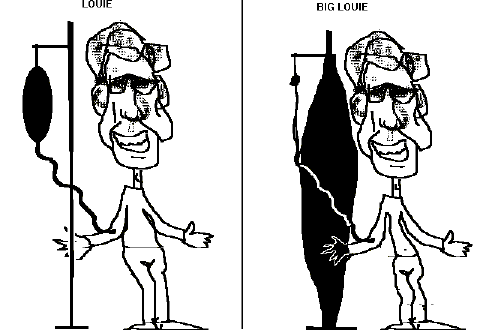
Louie, who tipped over when walking
Louie, who hummed so loud
That Jim had to sleep
In the loft
On the floor

And since this was in the days before
He had a proper camera
And bandwidth
The only picture of Louie that survives
Was drawn by a reader named Karl


He and Jim spend their days mailing out flyers
Sending faxes
Contacting anyone they knew
Does anyone want to produce a new musical
About AIDS?
Time was running out

They watched the Tony Awards together
They saw Jonathan Larson get his posthumously
Died before opening night
Jim, in tears, yelling,
THAT'S NOT GOING TO HAPPEN TO YOU

Then, a friend refers them to Irene
Who produces theater for the disabled
She told them of a theater on Melrose
A theater behind a neon sign shop
The Zephyr

Gary and Linda

It just so happened that the Zephyr
Had a Saturday morning play reading series
And somebody dropped out

Could they be ready in four days?

His ears were now plugged up
Something new on the attack
But he would not be deterred
Four days?

No problem.

NEXT: The Day The Gay Pride Parade Almost Did Him In.

Saturday, June 01, 2013

New York Times on AIDS Features Yours Truly.

Nicole Bengiveno/The New York Times
Here is the photo that leads off the New York Times article by John Leland about living long term with AIDS.
Steve Schalchlin would be the first to tell you he lives in a time of miracles, and about how hard that can be. In 1995, as his body wasted away from AIDS, he took the limited time in front of him as a challenge: he would write songs, make amends, fill his remaining days with life. And by the end, with his digestive system shut down, his figure skeletal, he was ready to die. Then he won a lottery for a new AIDS drug that had been rushed through the approval process. Almost overnight his health began to return, and with it, another, more open-ended, challenge: life.
A friend of mine complained that article didn't reflect how positive I am in real life, but I think he kind of did. The focus of the article was on the challenges of living with all the meds and side effects -- and also how so many don't have the kind of support system I've had; mainly Jim and Steinbeck, plus all my friends who love me and whom I love. We take care of each other. They are the ones who fill me with life.

That's why we need community. We all need community. You don't need AIDS to die of loneliness.

Steve Schalchlin with members of the Christ Church Bay Ridge Choir.
Photo by Stephen Anthony Elkins.

Thursday, May 30, 2013

Tales From The Bonus Round: The Package Pt. 2

TALES FROM THE BONUS ROUND
L.A. MAY 1996

Previous entry: The Package Pt. 1

The knock on the door seems so dramatic in retrospect
But he barely mentioned it in his diary
The Crixivan was just another drug
In a long line of drugs

Another punishment
In a long line of punishments

Instead, he wrote about his friends

A woman he nursed after she got too drunk at the ASCAP Awards

And the strangers
Who were slowly discovering him
And each other
On this new thing: The Internet

About "Bro. Jerry,"
A minister who used his lyrics
Going It Alone
In a sermon
Because a parishioner's son had died of AIDS

A sermon?

It had been years since he had even been inside a church
He thought of himself as the
Worst of the Worst kind of human being
Ashamed and angry and pissed off at churches

Why would a minister use the writings
Of a queer dying of AIDS?
In the pulpit

About meeting, online,
A 20-year old straight boy with AIDS
Named Shawn Decker
The Positoid

He wrote about his ears
Now painfully blocked up

About strangers whose lovers were dying

Locally, his music and his diary were being discovered
LA legend, Al Martinez in the LA Times
Before running it, he mentioned the song
CONNECTED
"Are you SURE that was Anson Williams [Potsie]
In the Waiting Room?"

(Later, he would make a primitive video
where he unsuccessfully tries to lip sync.)

It was almost in passing,
That he mentioned the package arriving
The FedEx knock at the dorr
He had almost forgotten about it because
Of mix-ups in the paperwork

Crixivan arrived May 22, 1996

He simply wrote that he had to take it on an empty stomach
And another drug on a full stomach
"..if I take the Crixivan at 6, 2, and 10, then I'd have to eat (and take the Saquinavir) at 7, 3 and 11. LUNCH AT 3? Dinner at 11? But I suppose I could eat lunch at 12, take a snack at 3 with the Saquinavir, dinner at 7, Crixivan at 10, and eat a snack with the Saquinavir at 11..."
But would any of it work?
Nothing had, so far
But he was determined to work it
He was a happily compliant patient

Meanwhile, he was wasting away
Nobody wanted to say it out loud
But he was dying

His doctor decided to put him on TPN
Total Parenteral Nutrition

He was being tortured by a daily friend
The Thing That's Killing Me
(complete with link)
Because his digestive system had just stopped working

He was wearing diapers

TPN, someone said,
Is what they give people just before they die
To give them a few weeks
To say goodbye to friends and relatives

A PICC line insertion into his veins
Which terrified him
Needles!
Nutrition infused directly into his blood

Meanwhile, the would-be producers of his musical
Are demanding rewrites to the score
Jim was starting on his fourth draft of the book
And they still had no theater and no money

Finally, the PICC line was inserted into his arm
A tube ran up his vein to his heart
He was ready to be fed

Then, a foul-up in his health insurance
He had the line in his arm
But no way to get the food

So, he drove to the agency and,
Sick as a dog, was herded
From one window to the next
Until someone gave him a phone number
"Another phone number?"

His arm throbbed.
His ears were blocked.
His stomach hurt.
His diaper felt moist.
The pay phone didn't work.

He desperately raced home
On the phone, paged through the system
Until he found a human voice
A woman
A voice that actually helped him
He fell in love with her
The nutrition would arrive the next day

Exhausted, his newly-ported arm throbbing,
He laid down to sleep
"I had this really weird dream last night, too. The weirdest I've had in a long time. Some dictator had taken over and we knew him and he wanted something from us. But I didn't have any AIDS meds left so I got sicker and started dying. The weird part is that I smiled at the thought that I'd thwart his plans by dying. I was triumphing in death."
It was his and Jim's 11th anniversary


NEXT: Things start to change. Plus, a little accident in front of Tim Curry.

Tuesday, May 28, 2013

Tales From The Bonus Round: The Package Pt. 1

TALES FROM THE BONUS ROUND
L.A. 1996
LATE SPRING/EARLY SUMMER

(Read the previous entry here.)

THE PACKAGE Pt. 1

After he got home from
The Last Cruise of His Life
After he had accepted that he was dying
With New infections taking over
Ear infections
Parasites defeating his immune system
All he had left in life was Jim,
Thurber the cat,
Jim’s childhood piano
A Radio Shack cassette of his songs
Recorded by himself in a single hour
And a desire to see his show
Just once

And the Internet
It was a new thing at the time
Like many desperately ill people
Needing help
Needing information about their disease
Needing community
Some trapped alone
Some with an abusive spouse
Some searching for alternative therapies
He went out onto the Net

And just told his story
About just being a patient
How being a patient makes you a nurse

People wanted to hear his healing music
So he gave the Radio Shack cassettes away
He signed and numbered them
“Remember me!” he sang. “I existed!"
He always gave it all away
He’d sing for anyone, anywhere
No matter how sick he felt
And, since he had nothing left to lose
He just told everyone that someday
He’d be in the rock and roll hall of fame

Or win a Tony
But right now, what he wanted most in life
Was to see his musical just once
One time before dying

But he knew little about theatre
He was just a guy with a cassette
It was Jim that made his songs into a musical
And Jim who filled the stage with people
People from the dying man’s life
Created The Last Session

How do you get something like that produced?
His cassette of songs
“the score” they called it
Recorded in a single hour of studio time
Of him singing the songs himself

Where are the orchestrations?
What are the harmonies like?
Which characters sing which songs?

He didn’t know
What he did know was that his ears were blocked
His throat was sore
This stomach hurt
They were burning things off his skin
He had massive diarrhea
He was eating only the BRAT diet

Banana
Rice
Applesauce
Toast
The BRAT diet

And the clock ticked away
Time had made him its numbering clock
He had wasted time
And now did time waste him


NEXT: The knock on the door

Thursday, December 08, 2011

AIDS drugs are safe.

Study shows longterm use of AIDS drugs is safe.


Michael CarterPublished: 08 December 2011A large international study has provided persuasive evidence of the long-term safety of antiretroviral therapy. Writing in the online edition of AIDS, investigators from the EuroSIDA study report that prolonged use of antiretroviral therapy did not increase the risk of death from non-AIDS-related illnesses.
“The main finding of our study was that there was no evidence of an increase in the risk of any non-AIDS-related death with prolonged exposure to cART [combination antiretroviral therapy],” comment the authors. “The results are reassuring that so far prolonged use of cART does not appear to be leading to increased risk of death due to some previously identified cumulative effect, or a drug effect whereby there is a long induction period before disease appears.”

Saturday, June 04, 2011

CNN Heroes spotlights African AIDS Activist.


During the 1990s in rural Kenya, Patricia Sawo believed that HIV/AIDS was a punishment from God.   When she discovered she was HIV positive, she prayed and fasted for years, hoping that would heal her.  When her condition became public, she and her husband lost their jobs and their home because of the stigma surrounding the disease.  Eventually, Patricia not only realized that she’d been wrong, but also that public attitudes about HIV in Kenya needed to change.  Now, she works to educate her community and care for those impacted by the disease, including the nearly 100 children she supports through her Discover to Recover Centre.

The link to Patricia’s story is available here http://on.cnn.com/h0VOJM.


Thursday, March 03, 2011

Gene Therapy, Possible AIDS Treatment for PWAs

Original article here.


In a bold new approach ultimately aimed at trying to cure AIDS, scientists used genetic engineering in six patients to develop blood cells that are resistant to HIV, the virus that causes the disease.
It's far too early to know if this scientific first will prove to be a cure, or even a new treatment. The research was only meant to show that, so far, it seems feasible and safe.


Friday, December 03, 2010

I'm Number Five!

Hello Steve

I just wanted to inform you about a new piece we've published over here at LPN to RN Blog called "Top 50 Blogs About HIV and AIDS." I found Bonus Round to be very interesting and relevant, so I thought that both you and your readers might enjoy the article. Please do let me know if you have any questions or comments --
http://lpntornbridge.org/2010/top-50-blogs-about-hiv-and-aids/
Warm Regards,
Alba Collazo
Co-founder, LPN to RN Blog

I went there and saw I'm number 5! So I wrote this Alba back and said, "I claim FOUL! That nasty little Shawn Decker came in number 1! That's so wrong! Why... why... why... I was the one who talked him into his online blog/diary in the first place!"

Okay. No, I didn't. I think, actually, this is the first time someone's put me on a list. I wrote her, thanking her very much for the honor, and also mentioned that since my mom is a retired RN, nurses mean a lot to me. They're the real front line of health care, and there's not a doctor who will disagree. (Okay, maybe one or two, but then we wouldn't go to that kind.)

Thanks. As a matter of fact, one of the men I met at the University Glee Club asked me if I ever did health-related concerts for schools. (Yes, I do.)

Wednesday, December 01, 2010

I Am Spartacus, SoulForce Style.


SoulForce has this simple idea, started by South African AIDS activist Zackie Achmat, and then repeated in Canada by my friend, Rev. Jim Mitulski and Dr. Joshua Love; a way to help end the stigma of HIV. Stigma causes death because, among many other things, it makes people afraid to get tested and to get treatment.
December 1, 2010 is World AIDS Day.  At Soulforce, our focus for this day of remembrance is on solidarity with people who are stigmatized by the diagnosis of HIV/AIDS.  We want to invite you to  join us in an action on World AIDS Day that you can do all by yourself and with people in your community.
Here are the steps:
Take out a plain t-shirt and a big magic marker and print “HIV+” on the shirt.  Then wear it to the coffee shop or work or to school, to the store or the gym.  Encourage people to ask you about it and then tell them “I am standing in solidarity today with people who are living with HIV and AIDS around the world.  As long as one person has HIV, I have HIV and my t-shirt is designed to say exactly that—no one is immune, all of us are in the fight to stop AIDS together.”
Go to their blog and read the whole inspiring history. 


The Faces of HIV.

Positively Aware publishes "A DAY WITH HIV IN AMERICA" pictorial.